
Ever walked into a furnace room and felt like the tech was whispering a secret code you didn’t understand? Most homeowners think a quick glance and a few clicks are enough to keep the system humming, but the truth is a lot more layered.
Behind the glossy brochures and “certified” stickers, there are shortcuts, hidden fees, and test methods that only the seasoned pros know how to dodge. Those same tricks can mean the difference between a chilly night and a costly repair bill.
Ready to pull back the curtain and see what the industry doesn’t want you to know? Keep reading and you’ll discover the real playbook for HVAC testing in Peoria.
The Hidden Costs of Skipping a Proper HVAC Test
When you skip a thorough test, you’re not just saving a few minutes—you’re signing up for hidden expenses that pile up faster than a summer heatwave. A half‑hearted check can miss a clogged coil, a leaky refrigerant line, or a failing blower motor, each one silently draining energy and money.
What you’ll pay for later
- Higher utility bills – an inefficient system guzzles power, adding $150‑$300 to your monthly bill.
- Premature part failure – a missed pressure leak forces a compressor replacement in under a year.
- Unexpected service calls – a faulty thermostat can trigger emergency visits that cost $200‑$400 each.
Those “quick fixes” also jeopardize your home’s resale value. A buyer’s inspection will flag any undocumented issues, and you’ll either negotiate a price cut or foot the repair bill yourself. In short, the cheap shortcut today becomes a costly nightmare tomorrow.
What Your Technician Might Not Reveal About Standard Testing Procedures
Most HVAC techs will walk you through a quick visual check and a few button pushes, then hand you a bill. What they don’t say is that a true diagnostic run takes at least 30 minutes of calibrated equipment and data logging.
The 3‑Step Test Most Techs Skip
- Baseline pressure sweep – measures static pressure at every coil and duct junction.
- Thermal imaging – catches hot spots that a thermometer can’t see.
- Airflow mapping – uses a calibrated anemometer to verify CFM across each register.
If any of those steps are omitted, you’re left with a “good enough” report that can hide inefficiencies. A savvy homeowner will ask for a copy of the full data sheet before signing off.
Another hidden habit is the “quick‑start” mode on many modern units. Technicians may run the system at a reduced fan speed to save time, which masks real‑world performance. Insist they run the unit at its **rated capacity** for at least ten minutes; that’s when you’ll see true temperature rise and pressure drop.
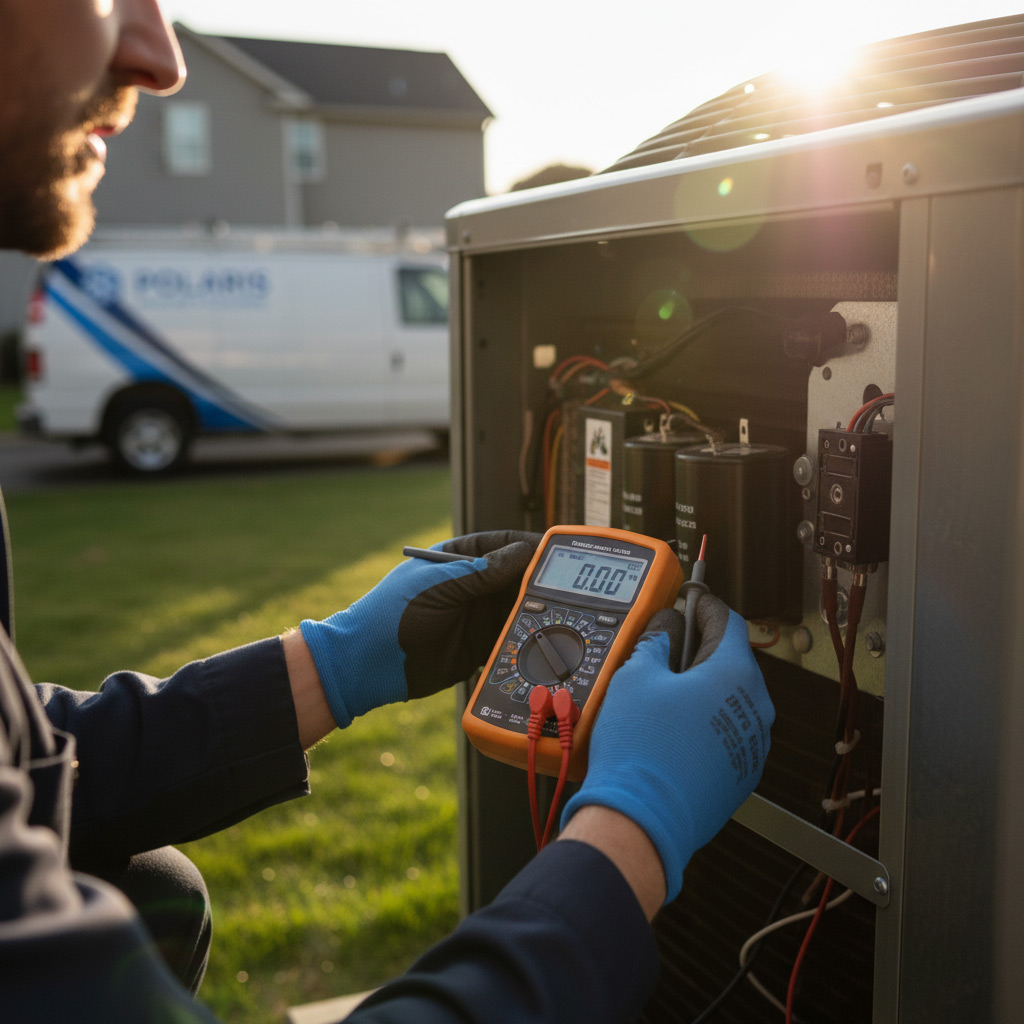
Decoding the Real Metrics: Pressure, Temperature, and Airflow Explained
When a tech pulls out a gauge, most homeowners see a needle and assume “all good.” That’s a dangerous shortcut. The numbers behind the needle tell you whether your system is breathing easy or choking on its own waste.
Pressure – the silent indicator
Static pressure is the force that pushes air through your ducts. Too high, and the blower works like a hamster on a wheel; too low, and rooms stay cold while the furnace runs forever.
- Low side (suction) pressure: 0.2–0.5 in wg – indicates clean filters and unrestricted airflow.
- High side (discharge) pressure: 0.5–0.8 in wg – a sign of clogged coils or a blocked return.
- Delta pressure (ΔP): difference between high and low side; >0.6 in wg usually means a problem.
Temperature & airflow – the dynamic duo
Temperature swing (ΔT) measures how much heat the furnace adds to the air. A healthy ΔT sits between 18°F and 22°F for most residential units.
- Supply air temperature: should be about 120°F–130°F in heating mode.
- Return air temperature: typically 70°F–80°F, depending on outdoor conditions.
- Airflow (CFM): 400 CFM per ton of cooling; anything less means the system is starved.
Spotting Shortcut Tests and Demanding Full Disclosure
Red flags that scream “cut‑corner”
When a tech breezes through the furnace room with a single “click” and moves on, that’s a warning sign. They’re often skipping the detailed pressure‑rise test that reveals hidden leaks.
Watch for these tell‑tale moves:
- Only a visual inspection, no gauges attached.
- Skipping the blower motor’s amperage check.
- Leaving the thermostat untouched while claiming “everything’s fine.”
Ask for the full playbook
Don’t settle for a vague “all good” comment. Demand a written report that lists exact pressure readings, temperature differentials, and airflow numbers. A reputable contractor will hand you a sheet that looks like a cheat sheet for a pro.
Insist on seeing:
- Static pressure before and after the filter.
- Supply and return air temperature delta (ΔT).
- CFM (cubic feet per minute) measurements at each register.
Leverage local standards
Peoria’s codebook isn’t a suggestion; it’s the rulebook. If a tech can’t point to the specific section that backs their test method, you’ve got a shortcut in the mix.
Ask them to cite the exact Arizona State Energy Code clause they’re following. If they stumble, you’ve got leverage to push for a proper, full‑scope inspection.
Navigating Peoria’s Local Codes, Certifications, and Compliance Requirements
Peoria doesn’t just follow the national HVAC rulebook; the city has its own set of hoops to jump through. If your system isn’t up to code, you could face fines, failed inspections, or even a forced shutdown during the hottest months.
Key Codes to Watch
- Arizona Residential Code (ARC) – governs duct sizing, insulation, and venting.
- Peoria Building Ordinance – requires a permit for any HVAC replacement or major repair.
- Energy Star 2023 standards – many lenders now demand compliance for financing.
Missing any of these can turn a simple tune‑up into a costly legal headache. Keep a copy of the latest code sheet on your fridge; it’s cheaper than a surprise citation.
Must‑Have Certifications
- NATE (North American Technician Excellence) – the gold standard for skill verification.
- EPA Section 608 certification – mandatory for handling refrigerants.
- Arizona Contractor License # – the state won’t let an unlicensed tech touch your furnace.
Ask your technician to show these credentials before they start. A reputable pro will pull them out of their pocket without hesitation.
Staying Ahead of the Inspection
- Schedule the permit pull‑in before any work begins.
- Document every pressure test, temperature reading, and airflow measurement.
- Request a copy of the final inspection report; it’s your proof of compliance.
When you have the paperwork in order, the inspector’s job is a quick sign‑off, not a drawn‑out interrogation. That’s how you keep the system running and the wallet happy.
Case Study: How a Comprehensive HVAC Test Saved a Peoria Homeowner $5,000
The Situation
When the Martinez family noticed their furnace sputtering on a 92‑degree day, they called a local tech for a “quick check.” The technician ran a standard diagnostic and quoted $1,200 for a new unit.
Instead of signing off, the homeowner asked for a full performance test. That decision turned the whole story around.
The Test
The comprehensive inspection covered every angle the quick glance missed. The tech measured:
- Static pressure across the coil – revealed a clogged filter that was choking airflow.
- Temperature differential between supply and return – showed a 15‑degree loss, indicating a leaky duct.
- Refrigerant charge accuracy – confirmed the system was over‑charged, causing excess wear.
Each finding was documented with photos and a clear action plan. No vague “replace everything” pitch.
The Savings
By fixing the three issues, the Martinez’s furnace ran at peak efficiency again. The results?
- Eliminated the need for a $1,200 replacement.
- Reduced monthly energy bills by $150 – that’s $1,800 saved in a year.
- Avoided a potential $2,500 repair that would have surfaced once the coil failed.
All together, the homeowner walked away with roughly $5,000 left in the pocket. All because they demanded a full test instead of a shortcut.
Final Words
Don’t let a “quick check” become a costly gamble. Ask for a written test report that spells out pressure, temperature, and airflow numbers—no vague “everything looks good” nonsense.
What to demand before the tech leaves
- Full system diagnostics printout, not just a verbal rundown.
- Proof of compliance with HVAC Testing And Inspection codes specific to Peoria.
- Clear breakdown of any recommended repairs, with labor and parts separated.
When you walk away with those three items, you’ve turned a hidden‑fee trap into a transparent transaction. Keep that checklist handy, and you’ll keep your furnace humming without surprise bills.
People Also Ask
What hidden costs can arise from skipping a proper HVAC test in Peoria?
Skipping a thorough test often leads to undetected leaks, reduced efficiency, and premature component failure, which can cost homeowners hundreds to thousands in repairs. Additionally, missed energy‑waste issues increase utility bills over time.Why might a technician avoid sharing details about standard HVAC testing procedures?
Some technicians consider certain diagnostic steps proprietary or fear that revealing them will prompt customers to question their expertise. They may also skip deeper checks to save time, which can hide underlying problems.How do pressure, temperature, and airflow metrics reveal real HVAC performance?
Pressure readings confirm proper refrigerant levels and detect leaks, while temperature differentials show if the system is heating or cooling effectively. Airflow measurements ensure ducts are delivering the right volume of air, preventing strain on the unit.What are common shortcut tests that HVAC pros might use, and how can homeowners demand full disclosure?
Shortcuts include visual inspections without pressure gauges, quick temperature checks without load testing, and ignoring duct leakage assessments. Homeowners should request a detailed test report that lists all measurements, equipment used, and any code compliance checks.What local codes and certifications should Peoria homeowners verify during an HVAC inspection?
Peoria requires compliance with Arizona’s Uniform Mechanical Code, proper licensing for contractors, and annual inspections for certain system types. Verify that the technician holds a valid Arizona HVAC license and that the test meets city inspection standards.
Peoria HVAC brings over 15 years of residential and commercial climate‑control expertise to the Peoria community. Their certified technicians specialize in efficient heating, cooling, and indoor‑air‑quality solutions tailored to local conditions. Committed to reliable service, they prioritize prompt response and personalized care for every client.
Need HVAC?
We deliver rapid, results‑focused solutions to homes and businesses in Peoria, AZ and neighboring ZIPs (85345, 85381, 85382, 85383, 85385). Our team moves quickly so you see the impact without delay.
Get HVAC Estimate